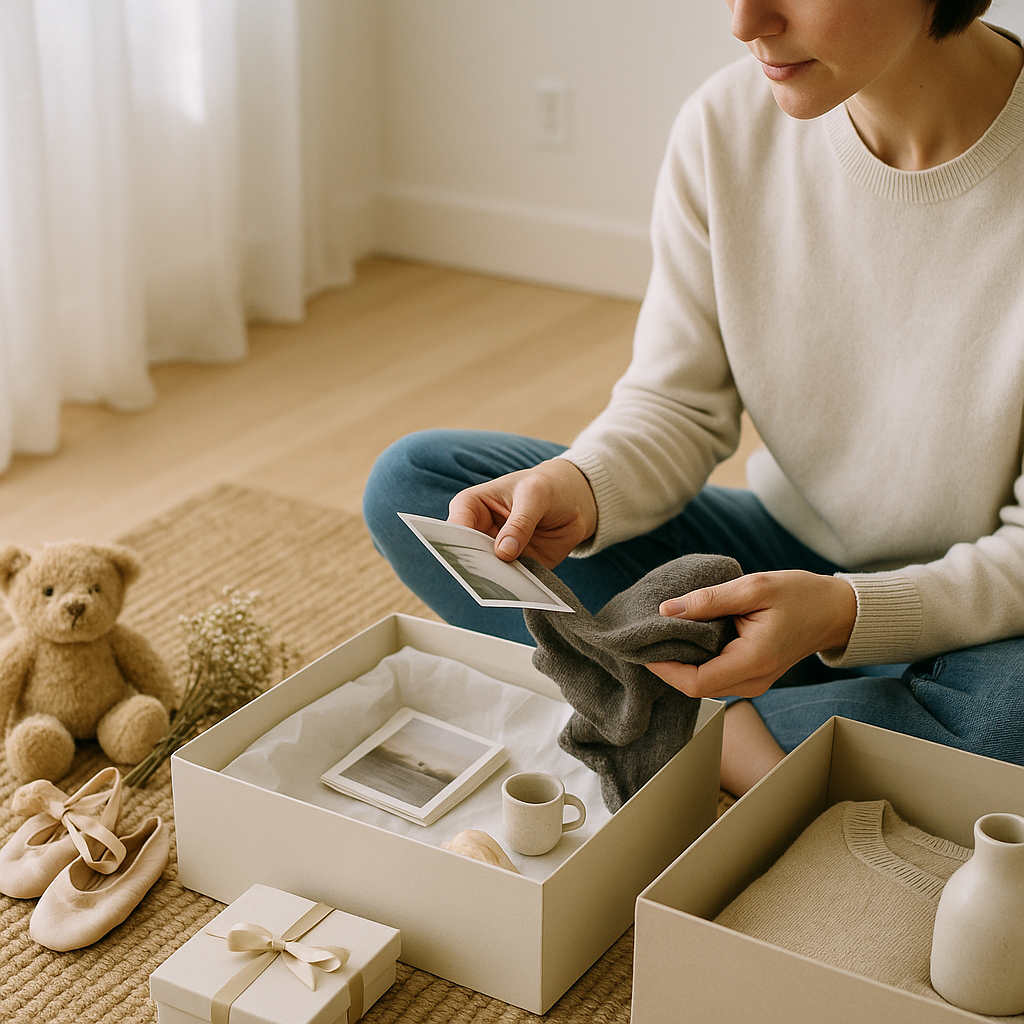
Sentimental clutter is the final boss of decluttering. You can blitz through a wardrobe of jeans that no longer fit and a drawer of mismatched Tupperware lids, but the box of your grandmother’s letters, your child’s first drawings, and the ticket stub from a concert that changed your life? That’s a different kind of decision. These items aren’t just stuff—they feel like the physical anchors of who we are and who we’ve loved.
The good news: deciding what to keep doesn’t have to mean cold, ruthless purging. With the right questions and a clear system, you can preserve what genuinely matters, release what’s only weighing you down, and feel lighter instead of guilty. Here’s how to do it.
Why Sentimental Items Deserve a Different Strategy
There’s a reason Marie Kondo’s famous method saves sentimental items for last—after clothes, books, papers, and miscellaneous belongings. By the time you reach the keepsakes, you’ve practiced the muscle of letting go on lower-stakes items. You’ve felt what it’s like to release something and survive it. That practice matters, because sentimental decisions are emotional, not logical, and you want some momentum behind you before you tackle them.
So if you’re staring down a basement full of memory boxes right now and feeling paralyzed, the first move is counterintuitive: step away from the sentimental items and declutter something easier first. Clear out the kitchen gadgets or the linen closet. You’ll arrive at the hard stuff calmer, more decisive, and with a real sense of what “keep” versus “let go” feels like in your body.
The Core Question: Can the Memory Survive Without the Object?
Here is the single most useful question for sorting sentimental items: Will I still remember this moment without keeping the physical thing?
Most memories don’t actually live inside objects. They live inside us. The object is a trigger, but it isn’t the only possible trigger. A wedding bouquet, for example, doesn’t store your wedding day—your mind does, and so do your photos, your spouse, and the story you tell about it. Once you separate the memory from the thing, a lot of “I could never get rid of this” items suddenly become optional.
Try running each item through a quick mental checklist:
- Is this actually sentimental, or just hard to throw away? Guilt, obligation, and “it was expensive” are not the same as genuine sentiment. Be honest about why you’re holding on.
- Does it evoke a genuinely positive memory? Some items carry sadness, stress, or a relationship you’ve outgrown. You’re allowed to release those.
- Can I preserve the memory another way? A photo, a video, or a written-down story may capture everything you need.
- Would I buy or seek this out today if I didn’t already own it? A surprisingly clarifying gut check.
If the memory can live on through a photograph and a sentence in your journal, you have permission to let the object go. The memory isn’t going anywhere.
Digitize to Keep the Story Without the Stuff
Digitizing is the modern decluttering superpower. Before cloud storage, holding onto physical keepsakes was the only way to preserve them. Now you can keep a tangible reminder without using a single square foot of shelf space.
This is especially powerful for items that are bulky, fragile, or impractical to store but emotionally meaningful: kids’ artwork, school papers, greeting cards, certificates, old letters, and trophies. You’re not erasing the memory—you’re moving it somewhere it can actually be enjoyed.
What to digitize and how
- Children’s artwork and schoolwork: Photograph each piece flat in good light. For a special touch, photograph your child holding their favorite pieces so the photo captures both the art and how small their hands were.
- Cards and letters: Scan or photograph them. If the handwriting itself is what matters, a clear image preserves it perfectly.
- Trophies, medals, and bulky awards: Take a photo, then let the physical object go. The achievement happened; the dust-collecting plastic isn’t what made it real.
- T-shirts and clothing with memories: Photograph them, or have a batch turned into a single memory quilt so dozens of shirts become one usable item.
A word of caution: digitizing only works if you actually look at the files later. Create a clearly labeled folder—or better, an annual photo book—so your digital memories don’t become an invisible, forgotten pile. The goal is to enjoy them more, not to hide them in a hard drive you never open.
Set a Physical Limit Before You Start
Decisions get easier when there’s a container telling you when to stop. Without a limit, “I’ll just keep this one too” repeats itself until you’re back where you started.
A simple, effective approach is the memory box system: one sturdy bin per family member. Everything truly worth keeping has to fit inside that person’s box. When the box is full, keeping something new means letting something else go. This turns abstract sentimentality into a concrete, manageable game—and it forces you to identify your most treasured items rather than keeping everything at the same low priority.
A few tips for making the limit work:
- Choose the box first, then fill it. Picking the container before you sort sets the boundary in advance, so you’re curating rather than accumulating.
- Give kids’ boxes some breathing room. If you’re setting up boxes for young children, leave space—they’ll add meaningful items as they grow, and you don’t want to fill the box before they’ve had their childhood.
- Label each box clearly. Names on boxes also serve a practical purpose down the line: if something happens to you, your family knows you intended those items for them, and they can decide for themselves what to keep. You’ve designated it; the choice becomes theirs, guilt-free.
Favor Items You Actually Use or Will Display
Sentiment and function aren’t opposites—and items that do both earn their place easily. If you inherited a beautiful carving set from your parents, let it replace the unremarkable one you bought out of necessity. Now you use the meaningful object every holiday instead of hiding it in a drawer. The memory becomes part of your daily life rather than a sealed-up relic.
Two practical filters help here:
The “would I display it?” test
If something genuinely brings you joy, you should be able to find a place to display or use it. If it’s not worthy of a spot on a shelf, a wall, or in regular rotation—and you can’t make room for it—that’s a strong signal it can go. A treasured item deserves to be seen, not stuffed in a tote in the garage.
The “am I living in reality?” test
Be honest about the future you’re keeping things for. Holding onto clothes that no longer fit “in case” is rarely realistic—and even if your circumstances change, you’ll likely want new things rather than the dated ones. The same logic applies to puzzles missing pieces, broken keepsakes, and items waiting for a repair that’s never coming. Anything you haven’t touched in a couple of years is usually ready to move on, sentiment or not.
Handling Guilt, Gifts, and Inherited Items
The hardest sentimental clutter usually isn’t yours by choice—it’s a gift you feel obligated to keep or an inheritance loaded with grief. A few reframes help:
- A gift’s job was finished the moment it was given. It expressed love and was received. Keeping it forever isn’t a requirement of having appreciated it.
- You are not the family museum. Inheriting everything from a loved one’s home isn’t honoring them—it’s often just transferring a burden. Keep the few pieces that genuinely connect you to them, and release the rest with gratitude.
- Offer items to others before donating. A sibling or cousin may treasure something you don’t. Passing it along keeps it “in the family” while clearing your space.
- Letting go is not forgetting. Releasing your grandmother’s entire china set while keeping one cup and saucer still honors her—and the one cup you’ll actually use means more than twelve you never unbox.
If grief is making decisions feel impossible, it’s okay to pause. Set those items aside in a clearly labeled box and revisit them in a few months when the emotions are less raw. Decluttering should never become a source of trauma—give yourself permission to go at a humane pace.
The Bottom Line
Deciding what to keep when decluttering sentimental items comes down to a handful of clear principles: warm up on easier categories first, ask whether the memory can survive without the object, digitize what you can, and give yourself a physical limit so the decisions have an end point. Favor the items you’ll actually use or display, stay grounded in your real life, and treat gifts and inheritances with compassion rather than obligation.
Your next step is small and concrete: get one bin. Choose a single box, label it with your name, and decide that the items earning a spot inside are the ones that truly tell your story. Then start digitizing the rest. You’ll be amazed how much lighter you feel—and how much more you’ll cherish the few things you chose to keep.