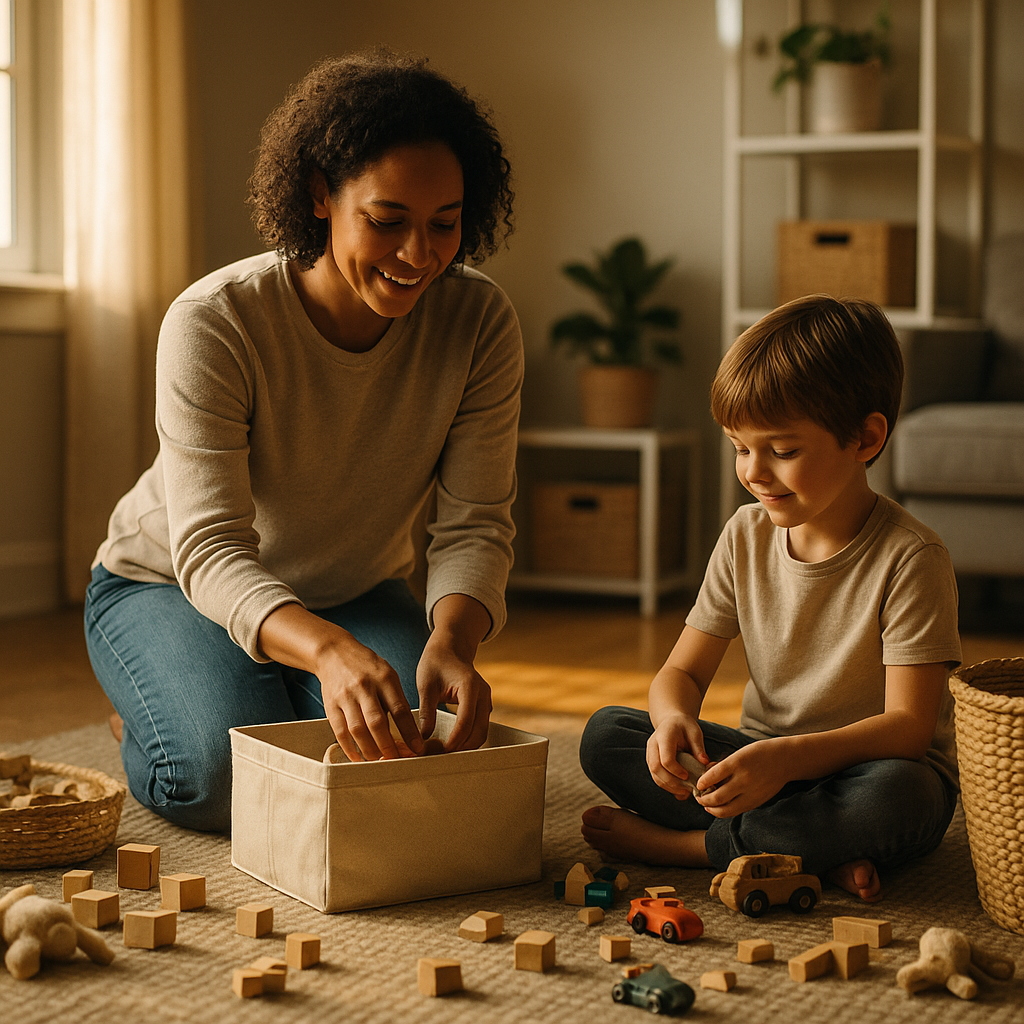
If you’ve ever stepped on a stray building block in the dark or opened a kitchen drawer to find a forgotten Play-Doh creature lurking inside, you already know the truth: toys multiply. They arrive through birthdays, party favor bags, fast-food meals, dentist visits, and the simple fact that kids accumulate stuff. The challenge isn’t just the volume — it’s that toys belong to small humans with big feelings, and clearing them out can trigger meltdowns if you’re not careful.
The good news is that decluttering kids’ toys doesn’t have to end in tears (theirs or yours). With the right approach — one that respects your child’s attachment while still moving clutter out the door — you can create a play space that’s calmer, easier to clean up, and genuinely more fun to use. Here’s how to do it without becoming the villain.
Start by gathering everything in one place
Before you can decide what stays and what goes, you need to see the full scope of what you’re dealing with. Grab a laundry basket or large tote and walk through your entire home collecting toys. Don’t just hit the playroom — check under beds, behind the couch, inside kitchen drawers, in the car, and in those random baskets where things “temporarily” land.
Bring all of it into one room and dump it out. Fair warning: this pile will almost certainly look worse than you imagined. That’s normal, and it’s actually the point. Seeing everything at once is a powerful reality check — for you and for older kids who think they “don’t have that many toys.” A mountain of plastic on the living room floor makes the case for decluttering far better than any lecture you could give.
Sort into clear categories
Once everything is in one spot, sort like with like. You’ll quickly notice patterns — three half-finished puzzle sets, a dozen orphaned figurines, broken crayons by the fistful. Common categories include:
- Building toys — blocks, magnetic tiles, construction sets
- Pretend play — kitchen items, dress-up, dolls, action figures
- Art and craft supplies
- Puzzles and games (check for complete sets here)
- Vehicles — cars, trains, trucks
- Stuffed animals
- Books
- Small odds and ends — the party-favor junk, the meal-toy trinkets, the broken bits
Sorting first makes the editing step dramatically easier, because you can see duplicates and gaps at a glance. It’s hard to argue for keeping the fourth incomplete board game when it’s sitting next to three others.
Decide what to keep, donate, and toss
Now comes the editing — the part that actually reduces clutter. Move quickly and trust your judgment. A toy generally earns its place if it’s played with regularly, is in good condition, has all its pieces, and is age-appropriate for your child right now.
Toys that have been outgrown, haven’t been touched in months, are broken beyond repair, or are the disposable fast-food variety can go. Set up three zones: keep, donate, and trash. Broken plastic and dried-up markers go straight in the trash; gently used items in good shape go to the donate pile for another family to enjoy.
The “toy purgatory” trick for the in-between stuff
Some toys are genuinely hard to call — especially larger items like a play kitchen or a ride-on car that your child might still love. For these, don’t agonize. Create a “toy purgatory”: a box or shelf somewhere out of sight, like the garage or a closet. If a few weeks pass and no one asks for the item, you have your answer, and you can donate it with confidence. If your child suddenly remembers and genuinely wants it, it’s easy to bring back out. This removes the pressure to make a perfect decision in the moment.
Decide how much to involve your kids
This is where the “without tears” part really lives. Whether your child should be present depends on their age and temperament.
When to declutter while they’re away
For younger children, and for the heavy lifting of clearing out obvious junk, it’s often kindest to do the work when they aren’t home. Move efficiently — treat it like a timed challenge and clear out the broken bits, the meal toys, and the things they’ve clearly outgrown. Most kids never notice these items are gone, because they weren’t actually playing with them. This spares everyone the emotional negotiation over a cracked plastic ring they’d otherwise insist they “love.”
When to bring them into the process
Older kids — roughly school-age and up — benefit from being part of the decision, especially for toys they have real opinions about. This builds the decluttering muscle they’ll use for life. A few approaches that reduce resistance:
- Frame it as helping another child. “Some kids don’t have many toys — which ones could you share with them?” reframes letting go as generosity rather than loss.
- Give a container limit, not a number. “Your stuffed animals need to fit in this bin” is far less stressful than “pick five to get rid of.”
- Let them keep the genuine favorites without debate. Save your energy for the gray-area items. Fighting over a beloved lovey isn’t worth it.
- Avoid being a killjoy. The goal is less clutter, not a sterile room. A kid who feels heard is far more cooperative next time.
Set up zones and storage that actually work
Decluttering only sticks if there’s a clear home for everything that stays. The most effective playrooms are organized into activity zones — a reading corner, an art area, a building space — so kids intuitively know where things go and where to play with them.
Store by size and use clear bins
One of the smartest organizing principles is to store by size. Tiny toys with a million pieces are the worst clutter offenders, so give them small, contained homes rather than dumping them into giant bins where they vanish to the bottom. Clear bins are worth the investment: kids can see exactly what’s inside without dumping everything out to find one car, and cleanup becomes a simple sorting game.
A few storage tactics that hold up in real homes:
- Use clear bins grouped by category so contents are visible at a glance.
- Label everything — with words, pictures, or both — so even pre-readers know where things belong and cleanup is self-directed.
- Keep frequently used toys at kid height and rarely used ones up high or out of reach.
- Use wall space — hooks and pegboards — to get bulky items off the floor.
Try a toy library rotation
If your child has plenty of toys you want to keep, consider a rotation system that works like a library. Pack a portion of the toys into bins and store them away, leaving only a manageable selection out. Periodically swap a bin out for a fresh one. Controlling how many bins are accessible at a time keeps the play space tidy, and the rotation makes old toys feel exciting again — kids genuinely react to a returning bin like it’s brand new. Many parents find this single trick cuts daily clutter more than any one purge.
Make decluttering a recurring habit
A single big purge feels great, but toys creep back in. The families with consistently tidy playrooms aren’t doing one heroic cleanout a year — they’re editing regularly. Kids’ interests change fast; the obsession of last spring is forgotten by fall.
A practical rhythm is to declutter at least twice a year. Two natural anchor points work well: right before the winter holidays (clearing space for the inevitable new arrivals) and around the end of the school year. With younger kids who accumulate faster, three or four times a year may serve you better. The simplest cue, though, is your own eyes: when the space starts feeling cluttered and chaotic again, it’s time for a quick edit. These maintenance rounds are fast because you’re not starting from a mountain — you’re just trimming.
Intercept the clutter at the door
You can also slow the inflow. Quietly toss the truly disposable party-favor and meal-toy junk before it migrates into the toy bins. Adopt a loose “one in, one out” mindset around birthdays. And when grandparents ask what the kids want, suggest experiences or consumables over more plastic. Less clutter coming in means less to declutter later.
The bottom line
Decluttering your kids’ toys without tears comes down to a repeatable process: gather everything in one place, sort it into categories, edit out the broken and outgrown items, and give what remains a clear, labeled home. Do the obvious clear-outs when little ones aren’t around, involve older kids in the gray-area decisions, and lean on tricks like toy purgatory and a library-style rotation to ease the emotional bumps.
Your next step is simple: grab one basket and start gathering. You don’t have to overhaul the whole house today — clear out a single category, set up a few labeled clear bins, and schedule your next edit for the change of season. A calmer, easier-to-clean play space is closer than the current pile on the floor would suggest.