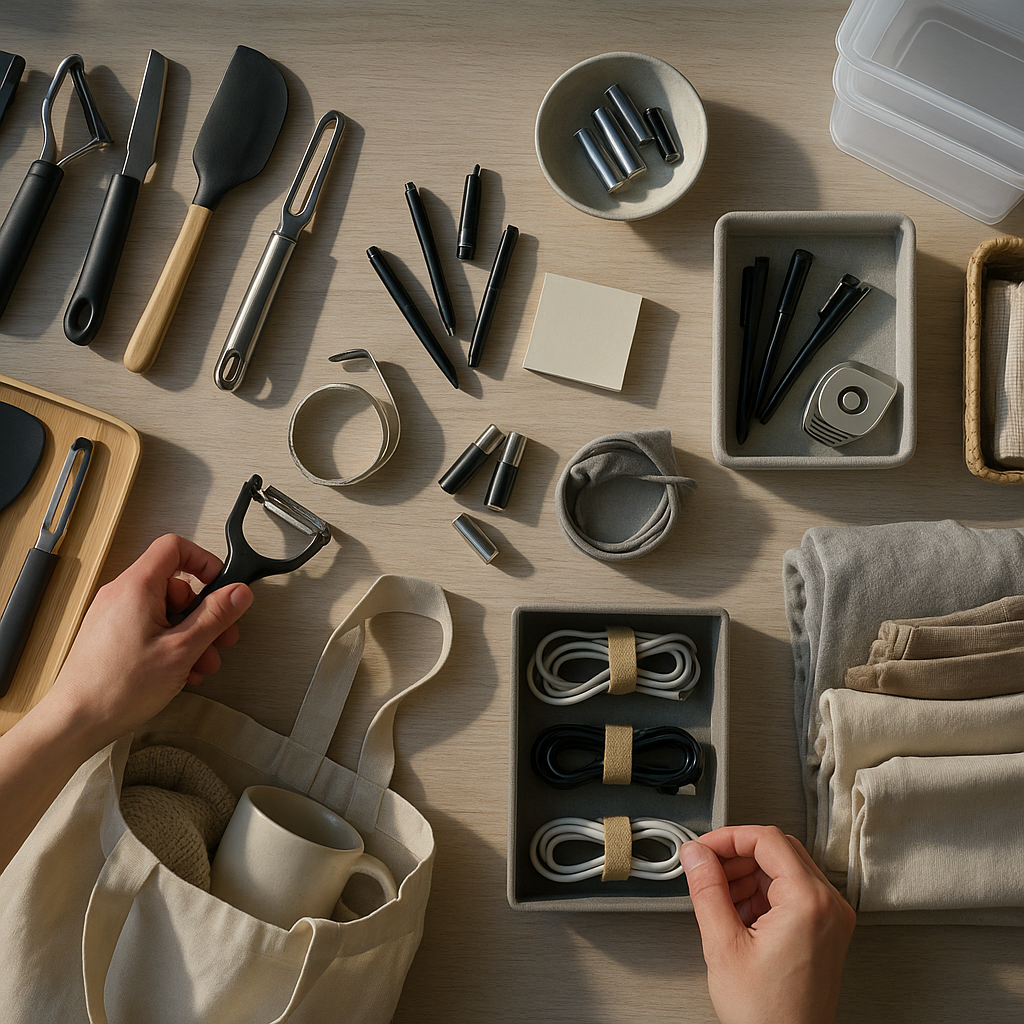
If you’ve ever spent a whole Saturday “decluttering” only to find your house looks exactly the same by Sunday night, you’re not lazy and you’re not bad at this. You’re almost certainly making one of a handful of predictable mistakes that quietly sabotage even the most motivated effort. Decluttering feels like it should be intuitive—just get rid of the stuff you don’t want, right?—but the process is full of small traps that turn a productive afternoon into a frustrating shuffle of belongings from one pile to another.
The good news is that these mistakes are common precisely because they’re so easy to fix once you can name them. Below are the five I see derail people most often, along with the practical adjustments that actually move the needle. None of these require buying anything or following a rigid system—just a clearer understanding of what’s gone wrong and how to course-correct.
Mistake 1: Waiting to Feel Ready Instead of Starting Small
The single most common reason people don’t declutter is that the whole project feels too big to begin. You look at a cluttered garage or an overstuffed closet, your brain registers the scale of the work, and you decide to tackle it “when you have a free weekend.” That weekend rarely comes, and even when it does, the overwhelm hits the moment you open the door.
The fix is to shrink the starting point until it feels almost too easy. Instead of “the garage,” you declutter one shelf. Instead of “the whole kitchen,” you do the junk drawer. A small, finished win builds the momentum and confidence that a vague, enormous goal destroys.
Where to start when everything feels like too much
- Pick a contained, low-emotion zone. A single drawer, the bathroom cabinet, or the area under the sink. You want a quick visible result, not a sentimental minefield.
- Set a timer for 15 minutes. Knowing there’s a finish line removes the dread. You’ll often keep going past the buzzer—but you don’t have to.
- Finish completely before moving on. One fully cleared, wiped-down drawer beats five half-sorted ones. Completion is what motivates you to come back tomorrow.
Starting small isn’t a compromise or a lesser version of “real” decluttering. It’s the strategy that lets people who’ve stalled for years finally get moving—and keep moving.
Mistake 2: Diving In Without a Plan or a Reason
Enthusiasm without direction is how you end up with twelve open piles, a living room that’s worse than when you started, and no energy left to deal with any of it. Decluttering without a plan means you make decisions on the fly, get distracted by every interesting object, and have no way to know when you’re “done.”
Before you touch anything, get clear on two things: what you’re decluttering and why. The “why” matters more than people expect. Are you clearing space because you’re moving? Trying to make mornings less chaotic? Reducing what you have to clean around? Your reason shapes your decisions. If your goal is a calmer morning routine, the entryway and the closet matter more than the basement.
Make a simple plan you’ll actually follow
- Write down your real motivation. One sentence is enough. “I want to be able to park in my garage” is a goal you can measure against.
- Choose one area at a time and define its edges clearly. “The hall closet” not “the hallway and maybe the closet and possibly that shelf.”
- Decide where things go before you start. Have a donate box, a trash bag, a “belongs elsewhere” basket, and a recycling spot ready. When you pick up an item, it has somewhere to land.
- Plan what happens to the stuff you remove. If you’re selling items to put money toward a goal, know where that money is going—otherwise it quietly disappears and you’ve simply moved clutter from your home to your car.
A plan turns an overwhelming chore into a sequence of small, defined tasks. It also protects you from the most demoralizing outcome of all: working hard for hours with nothing finished to show for it.
Mistake 3: Buying Organizing Containers Before You Declutter
This is the most seductive mistake because it feels like progress. You watch a few videos, get inspired, and head to the store for matching bins, drawer dividers, and pretty labeled baskets. The problem is that you’ve now spent money organizing clutter you haven’t even decided to keep.
Here’s the core principle every experienced organizer comes back to: organized clutter is still clutter. Containers don’t reduce what you own—they just hide it more attractively. And when you buy storage first, you tend to fill it, which means you keep things you’d otherwise have let go of simply because there’s now a labeled spot for them.
Decluttering always comes before organizing, and the order is not negotiable if you want lasting results. Once you’ve removed everything you don’t use or love, two things happen. First, you’ll need far fewer containers than you thought. Second, you’ll know the exact sizes and quantities to buy, because you’ll be shopping for what’s actually staying. Take measurements after you’ve pared down, then buy storage to fit—not the other way around.
Mistake 4: Handling Items Repeatedly and Postponing Decisions
Watch someone declutter slowly and you’ll notice a pattern: they pick something up, study it, set it back down, pick it up again ten minutes later, and never actually decide anything. Every time you touch an item without making a decision, you spend mental energy and gain nothing. Do that across a few hundred objects and you’ll be exhausted before you’ve made a dent.
The antidote is a rule professional organizers swear by: touch it once. When you pick something up, decide its fate right then—keep, donate, trash, or relocate—and act on it immediately. Don’t reshuffle, don’t revisit, don’t admire it for the third time.
Keep your decisions moving
- Limit your “maybe” pile. A small maybe pile is human; an enormous one means you’re just avoiding decisions. If everything is a maybe, nothing leaves your house.
- Use a quick gut-check question. “Have I used this in the last year?” or “Would I buy this again today?” Trust your first answer instead of building a research project around a spatula.
- Try a time-based test for tough calls. Some people find it helpful to give themselves only a few seconds to remember the last time they used an item. If nothing comes to mind quickly, that’s usually your answer.
- Box up genuine maybes with a date. If you truly can’t decide, seal those items in a box, label it with today’s date, and store it out of sight. If you haven’t opened it in a few months, donate it unopened.
Decisiveness is a skill that improves with practice. The more decisions you make quickly, the easier the next one becomes—and the faster you’ll see the room actually empty out.
Mistake 5: Trying to Do It All Alone (and All at Once)
Two related errors live under this heading. The first is decluttering shared spaces and other people’s belongings in isolation. If you purge your partner’s or kids’ things without involving them, you’ll spark resentment and almost certainly end up re-buying or replacing things that mattered to someone. Decluttering a shared home works best as a conversation, not an ambush.
The second error is treating decluttering as a one-time marathon. People burn out trying to do the entire house in a single weekend, then never want to repeat the experience. Decluttering is far more sustainable as an ongoing rhythm than a heroic, exhausting event.
Build a system you can maintain
- Bring others in early. Let family members make decisions about their own belongings. Even young kids can choose which toys to pass on when you frame it kindly.
- Adopt a small repeatable habit. A simple approach is to regularly gather a dozen items to toss, a dozen to donate, and a dozen to return to their proper home. It’s manageable and keeps clutter from creeping back.
- Schedule short maintenance sessions rather than waiting for crisis-level mess. Fifteen minutes a week beats two exhausting days a year.
- Address the inflow. Understand why the clutter accumulated in the first place. If you don’t change your buying or storing habits, you’ll simply refill the space you just cleared.
The Bottom Line
Most decluttering frustration doesn’t come from a lack of effort—it comes from these five fixable missteps: never starting because the job feels too big, working without a plan or a clear reason, buying containers before paring down, handling items endlessly without deciding, and going it alone in one exhausting push.
Pick the mistake that sounds most like you and fix that one first. If you’ve been stalled, start with a single drawer this week and set a 15-minute timer. If you tend to fizzle out, write down your one-sentence “why” before you begin. Small, deliberate corrections turn decluttering from a dreaded annual ordeal into a steady habit that actually keeps your home clear—and keeps it that way.