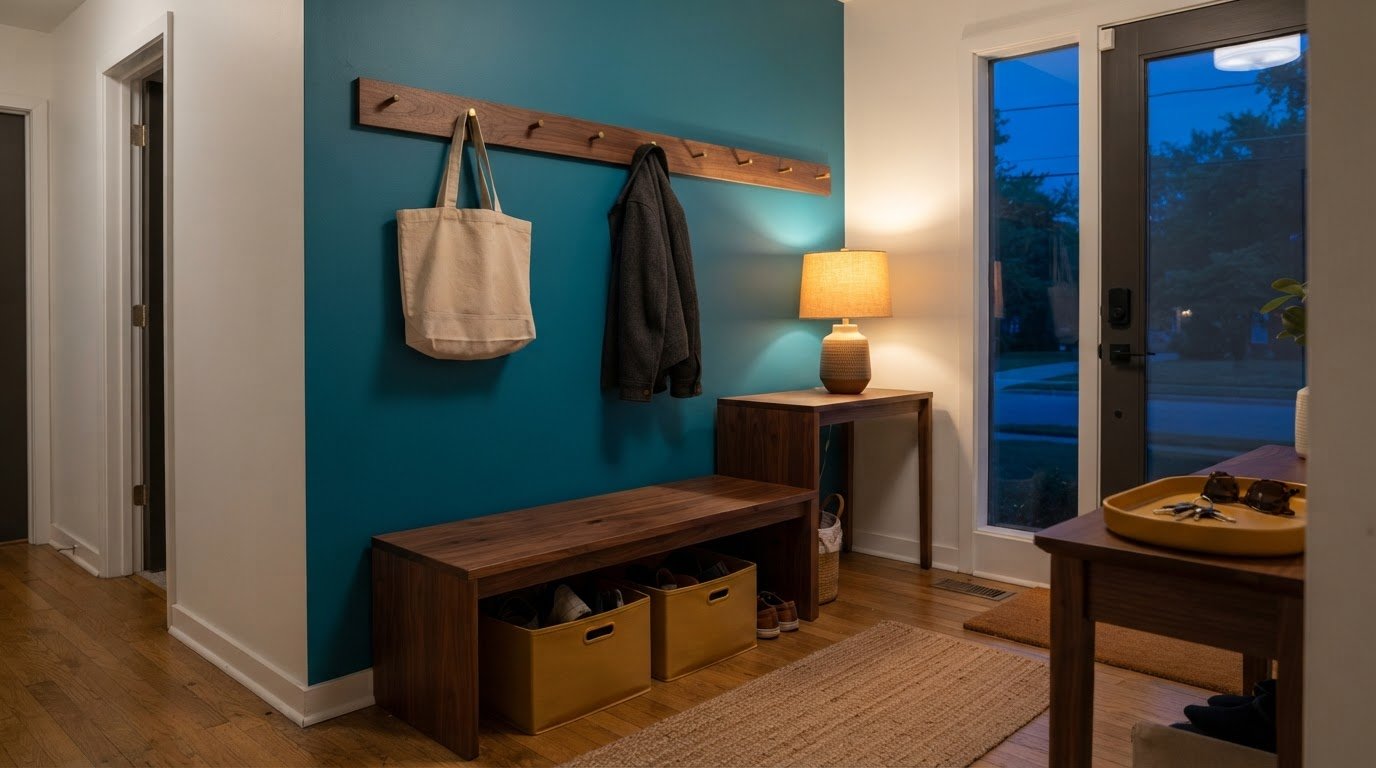
A home drop zone is the first barrier against household chaos. When you walk through the door with your hands full, whatever system is waiting for you dictates where your belongings land. Without a dedicated landing spot, coats drape over dining chairs, school backpacks slide across the kitchen floor, and keys disappear into random corners.
You do not need an expansive, Pinterest-ready mudroom with custom cabinetry to solve this problem. A functional drop zone simply requires identifying where clutter naturally accumulates and putting low-friction systems in place. By tailoring the setup to your home’s layout, you can contain daily gear right at the point of entry.
The 4 Core Elements Every Drop Zone Needs
Regardless of where you set up your drop zone, every functional setup relies on four primary components to keep everyday items off floors and flat surfaces:
- Low-friction hanging storage: Coats, dog leashes, and bags need immediate hooks. Coat hangers on a closet rod create too much resistance for daily use; simple wall hooks or over-the-door hooks ensure items are hung up rather than tossed aside.
- Dedicated shoe containment: Shoes multiply near entry points quickly. A low shoe rack, a wide shallow basket, or a stackable shelf keeps footwear out of walking paths.
- Small-item landing dishes: Wallets, transit passes, sunglasses, and keys need a designated tray, shallow bowl, or upcycled jar so they do not migrate to kitchen counters.
- Personal “Go Baskets”: A separate basket or cubby for each household member holds grab-and-go essentials such as lunchboxes, library books, hats, or sports gear.
If You Have a Small Entryway (or None at All)
When the front door opens straight into a living room or a narrow hallway, floor space is at a premium. Bulky furniture will choke the walkway, so the focus must shift to narrow profiles and wall space.
Start by evaluating the vertical clearance behind or beside the door. You can use vertical space to store more in small rooms without taking up valuable walking area. Mount a single board with heavy-duty double hooks at eye level for adult coats and bags, and install a second row lower down for children’s items. If you are dealing with very tight square footage, read through practical tactics on how to store shoes when you have no entryway to keep the floor clear.
A slim console table with an open base can slide against a narrow hallway wall. Place a tray on top for keys and mail, and slide two storage baskets underneath for everyday shoes. If there is no space for a console, a floating wall shelf with integrated key hooks underneath serves the exact same purpose with zero footprint.
Converting a Standard Reach-In Coat Closet
If you have a traditional reach-in closet near your primary door, you can convert it into a mini interior mudroom. Standard closets with a single high rod and shelf often waste the bottom two-thirds of their volume, leading to piles of shoes under hanging garments.
To convert the closet into a functional drop zone:
- Remove the traditional hanger bar, or slide all formal guest coats to one narrow side.
- Mount sturdy utility hooks along the back wall and the inside of the closet door. Hooks make it realistic for everyone in the house to hang their jackets instantly.
- Add a low, sturdy bench or a modular cubby shelf across the closet floor. The top surface provides a place to set bags down or sit while putting on boots, while the cubbies underneath hold daily footwear.
- Label upper shelf bins for out-of-season accessories, extra bags, and bulk weather gear like umbrellas.
If the closet doors swing inward or get in the way of traffic flow, consider removing the doors entirely and painting the interior a clean, bright neutral. This creates an open alcove that feels built-in while removing the physical barrier of opening a door when your arms are full.
Using the Laundry Room as a Hidden Drop Zone
For homes where family members enter through a garage or side entrance that connects directly to the utility area, the laundry room is one of the most practical places to establish a makeshift drop zone. It keeps everyday clutter hidden away from main living spaces and guest view.
Because laundry rooms handle high traffic and moisture, prioritize durable, wipeable surfaces. An unused wall across from the washer and dryer can host a mounted wall rack or a premade hall tree with hooks, a small bench, and cubbies. If floor space around the appliances is tight, mount over-the-door hooks onto the door that leads into the kitchen to hold athletic gear, reusable grocery totes, and swim bags.
Take advantage of the laundry room’s counter space if you have it. Place a paper sorter or small drawer unit on one end of the folding counter to process school forms, receipts, and incoming letters before they spread to your kitchen island. Pair this physical sorting area with regular habits to declutter paper clutter and important documents so bills and school notices do not sit indefinitely.
The Garage Entryway Drop Zone
If you primarily enter the house through an attached garage, stopping dirt and clutter before it crosses the interior threshold is the most efficient strategy. The garage offers substantial wall area, making it ideal for bulky gear that otherwise overwhelms indoor entryways.
Focus on the perimeter wall right beside the access door leading inside. Install a heavy-duty wall rail system or horizontal wooden cleat. From here, you can hang heavy winter coats, sports bags, and backpacks on deep utility hooks. Place an industrial boot tray directly on the garage floor next to the door to catch wet shoes, mud, and road salt.
Because garages fluctuate in temperature and humidity, avoid fabric storage bins. Instead, assign each family member a heavy-duty plastic crate or wire wire basket to serve as their individual grab-and-go container. Keep a closed recycling bin within arm’s reach of the door so unwanted junk mail from the mailbox never even enters the house.
Managing the Daily Flow of Items
A drop zone fails when it is treated as a long-term storage unit rather than a transit station. When hooks hold four coats per person and shoe trays hold six pairs of shoes per family member, the system collapses under its own weight.
Establish a strict capacity limit: one seasonal jacket and two pairs of everyday shoes per person at the drop zone. Anything beyond that should return to personal bedroom closets. Once a week, spend five minutes clearing accumulated papers, empty water bottles, and extra footwear that have gathered around the hooks. With clear boundaries and an intentional layout, your home drop zone will keep your living spaces organized every time you walk through the door.