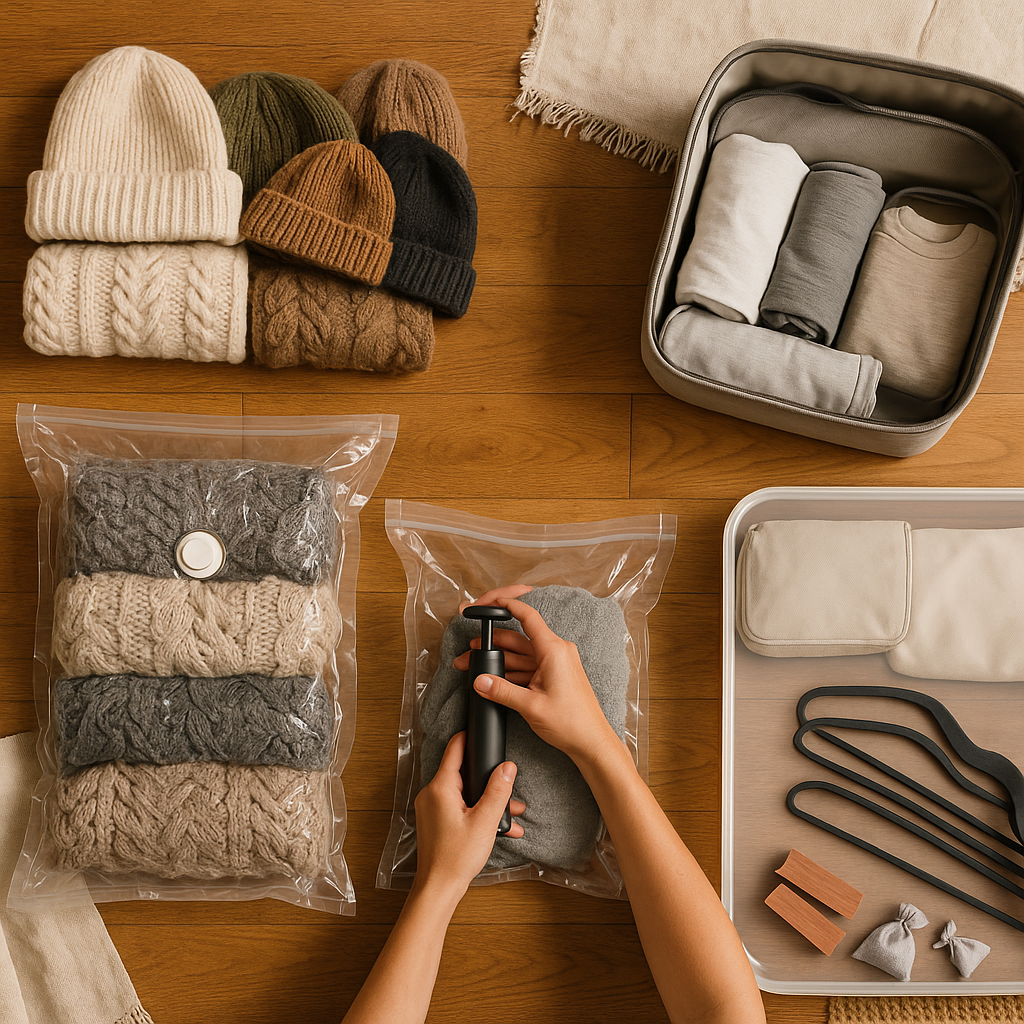
Twice a year, most of us run into the same problem: half the wardrobe is unwearable for the season, but it’s still taking up prime closet real estate. Wool sweaters crowd out sundresses in July, and bulky coats elbow shorts off the shelf in January. The fix isn’t a bigger closet — it’s a smarter system for getting off-season clothes out of the way without damaging them or losing track of what you own.
Done well, seasonal storage frees up surprising amounts of space, keeps your clothes in good shape, and makes the twice-yearly swap feel like a quick chore instead of a dreaded ordeal. Here’s exactly how to do it.
Start by storing less, not better
The biggest space-saving move happens before you buy a single bin. Every item you pack away is something you have to store, protect, and eventually unpack — so the off-season swap is the ideal moment to be honest about what’s earning its place.
A simple, reliable filter is the one-year rule: if you didn’t wear something during its entire last season, you almost certainly won’t miss it. This forces a real assessment of what you actually use versus what you keep “just in case.” Sort everything into keep, donate, and a small “maybe” pile, and resist the urge to store items purely out of guilt over what they cost.
If you find decisions hard to make in the moment, try the backward hanger trick during the season itself: turn all your hangers to face the wrong way, and flip each one forward only after you wear that item. By the end of the season, anything still backward is a clear candidate to let go. It removes the guesswork from “do I actually wear this?”
Clean everything before it goes into storage
This is the step people skip most often, and it’s the one that causes the most heartbreak months later. Storing clothes dirty is an open invitation to moths and other pests — they’re drawn to body oils, sweat, and food residue far more than to clean fabric. A sweater that looked fine when you folded it can come out in spring with holes or stains that have set permanently.
Before anything gets packed away:
- Launder or dry-clean every item, even pieces you only wore once. Invisible oils and odors attract pests.
- Check and empty all pockets — a forgotten receipt or candy can stain or draw insects.
- Make sure everything is completely dry. Even slightly damp fabric trapped in a sealed container is a recipe for mildew.
- Skip the starch and fabric softener residue where possible, since some finishes can yellow over long storage.
One important caveat: don’t store clothes in the plastic bags from the dry cleaner. Those bags trap moisture, prevent fabric from breathing, and can cause yellowing over time. Take garments out of the plastic before they go into long-term storage.
Choose containers that protect, then save space
It’s tempting to choose storage purely on how much it crams into a closet, but the priority order matters: protection first, space-saving second. A container that flattens your wardrobe to nothing is useless if it leaves your clothes musty or damaged.
Breathable bins and bags for most clothing
For the bulk of your folded items, opt for breathable storage — fabric bins, canvas containers, or plastic bins that aren’t fully airtight. Natural fibers like wool and cotton need a little airflow to stay fresh and avoid trapping humidity. Toss in a couple of cedar blocks or lavender sachets, both of which help deter moths naturally, and consider a dehumidifier pack to absorb stray moisture before you close the lid.
Garment bags for the pieces you hang
Not everything should be folded. Structured coats, blazers, delicate dresses, and anything prone to creasing do better on hangers. For these, use cotton garment bags rather than plastic — cotton lets the fabric breathe while still keeping dust off. Hang nicer pieces on wooden hangers inside their own bags so they keep their shape. A clever touch some organizers use: tape a small printed photo of the outfit to the outside of the bag so you instantly remember what’s inside without unzipping it.
Vacuum-sealed bags for the bulkiest items
Vacuum-sealed bags are the heavy hitters for space savings, shrinking down comforters, puffy jackets, and thick synthetic items dramatically. But use them selectively. They work beautifully for down, polyester fill, and other resilient synthetics, which bounce back after being compressed. Be more cautious with natural fibers like wool, cashmere, and leather — prolonged hard compression can crush the fibers and leave permanent creasing. For those, a loosely packed breathable bin is the safer choice.
Put your storage in the right place
Where you stash your bins matters as much as what’s in them. The single most important rule: off-season clothes should live somewhere cool and dry. Heat and humidity are what cause mold, mildew, and that unmistakable musty smell, so avoid damp basements, hot attics, and garages that swing between extremes. A climate-controlled interior space is ideal.
Some of the best spots hide in plain sight:
- Top closet shelves. The upper reaches of a closet are perfect for items you won’t need for months. Adding a single extra shelf up high can create a whole new storage zone you weren’t using.
- Under the bed. Low-profile bins slide neatly under most beds and keep clothes accessible but out of sight.
- A guest closet or spare-room closet. If you have one that’s underused, it’s prime off-season territory.
- The bottom of your main closet, behind everyday items, for a bin or two you can reach without a step stool.
Whatever you choose, don’t overcrowd your everyday closet with so much stored clothing that it interferes with daily use. The goal is to make this season’s wardrobe easier to navigate, not to trade one cramped space for another.
Make the future swap effortless with smart labeling
The difference between a storage system you’ll actually maintain and one you’ll abandon usually comes down to labeling. When everything is clearly marked, the twice-yearly swap takes minutes; when it’s a guessing game of unmarked bins, you avoid it entirely.
Label clearly and on the side that faces out, not just the top — you want to read a bin without pulling it down from a high shelf. Useful labeling approaches include:
- By season and category: “Winter – Sweaters,” “Summer – Shorts & Tanks.” Specific beats vague every time.
- By person in a multi-person household, so swaps don’t turn into a sorting marathon.
- With a contents photo taped to the bin or garment bag for pieces you might forget you own.
- With a quick inventory note inside the lid if a bin holds a mix of items.
It also helps to treat the swap as a planned project rather than a spontaneous afternoon scramble. Many people find it less overwhelming to do it in stages — pulling out the incoming season’s clothes one day and packing away the outgoing ones a few days later. Setting yourself up with a clear plan and a calm mindset turns a dreaded chore into something genuinely manageable.
Common mistakes that quietly ruin stored clothes
Even a good system can be undone by a few avoidable errors. Watch for these:
- Packing clothes dirty. The number-one cause of pest damage and set-in stains. Always clean first.
- Using dry-cleaner plastic for storage. It traps moisture and yellows fabric. Switch to cotton garment bags.
- Sealing damp items. Trapped humidity in a closed bin breeds mildew fast.
- Over-compressing delicate fibers. Vacuum bags are great for synthetics, risky for wool and cashmere.
- Storing in attics or garages. Temperature and humidity swings damage fabric over months.
- Skipping moth deterrents. A few cedar blocks or lavender sachets are cheap insurance.
- Storing things you’ll never wear again. Declutter first so you’re only protecting clothes worth keeping.
The bottom line
Saving space with seasonal clothing comes down to a simple sequence: pare down what you store, clean everything thoroughly, choose protective-but-breathable containers, stash them somewhere cool and dry, and label clearly so next season’s swap is painless. Reserve vacuum bags for sturdy synthetics, give natural fibers room to breathe, and keep your everyday closet uncluttered.
If you only do one thing differently this season, make it this: launder every item before it goes into a labeled, breathable bin on a high shelf or under the bed. That single habit protects your clothes, reclaims real estate, and sets up a system you’ll happily keep using for years.