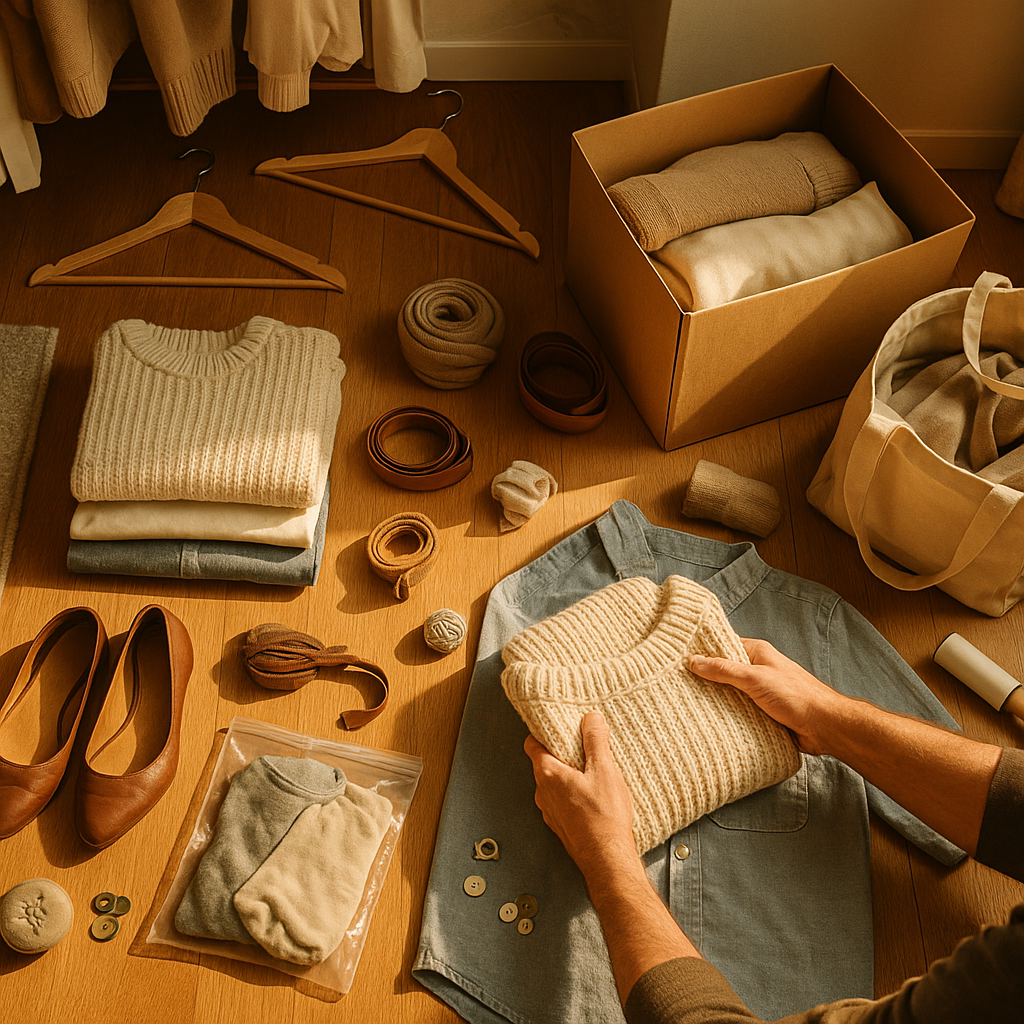
There’s a particular kind of paralysis that sets in when you open a closet stuffed past capacity. The rod sags, hangers are crammed so tightly you can’t slide them, and somehow you still stand there thinking you have nothing to wear. If that sounds familiar, you’re not failing at organization — you’re simply trying to manage too much stuff in too little space. The fix isn’t a clever folding hack or another set of matching hangers. It’s removing the excess first.
Decluttering an overstuffed closet feels daunting precisely because there’s so much in it. But that volume is also the opportunity: when you have too many clothes, you almost certainly have a large pool of items you don’t wear, don’t love, or forgot you owned. This guide walks you through a realistic process — one that won’t leave you buried under an avalanche of clothing on your bed at 10 p.m. wondering what you’ve done.
Start small instead of emptying everything
Conventional advice tells you to dump every single item onto the bed and sort from zero. With a modest wardrobe, that works. With too many clothes, it backfires — you end up with an overwhelming mountain, you run out of steam halfway through, and everything gets shoved back in worse than before.
A smarter starting point is to do the reverse. Instead of pulling everything out, pull out only the pieces you actually wear the most — your true workhorses. Think of the jeans you reach for weekly, the jacket you grab without thinking, the three or four tops in heavy rotation. Set those aside as your wardrobe’s foundation. Seeing your real, lived-in style in front of you gives you a reference point: now everything still hanging in the closet has to justify why it deserves to stay alongside those favorites.
This approach has a quiet psychological benefit. You begin from a place of clarity about what works for you, rather than from guilt about what doesn’t. Decisions get easier when you’re measuring items against a standard instead of staring at a pile of equally weighted “maybes.”
Take the easy wins first
Before you agonize over sentimental or expensive pieces, clear out the obvious. These are the no-debate decisions that build momentum and instantly free up space, which makes the harder choices feel manageable.
Pull anything that fits these categories straight out of the closet:
- Items that don’t fit — not the body you hope to have, the body you have now. Clothes you’re “saving” for a future size deserve a separate box, not prime closet real estate.
- Damaged clothes you’ll never repair — stretched-out elastic, broken zippers, stains that won’t budge, pilled knits. If you haven’t mended it in a year, you won’t.
- Duplicates of things you barely wear — five nearly identical black cardigans when you only ever reach for one.
- Itchy, uncomfortable, or fussy pieces — the sweater that scratches, the dress that needs constant adjusting. Comfort dictates what you actually wear.
- Anything that makes you feel bad — the impulse buy with tags still on, the gift you never liked, the “mistake” purchase you keep as a reminder of money spent.
Don’t overthink this stage. The goal is volume reduction and momentum. You’ll likely be surprised how much leaves the closet before you’ve made a single difficult call.
Try things on — and be honest
For everything that survives the easy-wins pass, the deciding factor is whether you’ll genuinely wear it. The most reliable way to know is to put it on. Reading a garment on a hanger lies to you; the fit, the way it sits, how it makes you feel — those only reveal themselves on your body.
Sort into clear categories as you go
Work through one clothing type at a time — all the tops, then all the pants, then dresses, and so on. Grouping like with like exposes redundancy you’d otherwise miss. It’s hard to argue you need eleven striped tees when they’re lined up side by side. As you handle each piece, sort it into three honest piles:
- Keep — it fits, you reach for it, it suits your real life.
- Let go — donate or sell; someone else will get more use from it.
- Undecided — keep this pile small and deal with it separately (more on that below).
Ask better questions than “might I wear this someday?”
“Someday” is how closets get overstuffed in the first place. Replace it with sharper questions: When did I last wear this? Would I buy it again today at full price? Does it work with at least two other things I own? If I saw it in a store right now, would I even notice it? Honest answers cut through the fog of attachment quickly.
A no-fuss method for indecisive closets
If the try-on marathon sounds like more energy than you can muster, there’s a passive technique that does the deciding for you over time — and it’s especially good for the genuinely undecided pile.
Turn every hanger in your closet backward, so the hook faces you. Note the date on your calendar about six months out. Each time you wear something and return it, hang it the normal way. When your reminder arrives, any hanger still facing backward marks a garment you haven’t touched in half a year. Unless there’s a specific reason to keep it — a formal outfit for rare occasions, true seasonal wear — that item has told you everything you need to know. Donate or sell it.
This method removes the emotion from the equation. You’re not guessing whether you’ll wear something; you’ve collected actual evidence. It’s a forgiving way to declutter for people who freeze up when forced to make on-the-spot decisions.
Organize what’s left so it stays that way
Once you’ve removed the excess, the clothes you kept deserve a system that keeps them visible and easy to use. A decluttered closet that descends back into chaos within a month wasn’t really finished — it just had its volume lowered.
Hang generously, fold the rest neatly
Hang as much as comfortably fits, including lighter pieces like tank tops and workout tops if you have the room and hangers. Hanging keeps clothes wrinkle-free, in sight, and easy to grab — and things you can see are things you actually wear. Arrange them like with like and in a logical order: lighter and shorter items toward one end, building up to long sleeves, sweaters, and jackets at the other. Many people find arranging by category and then by sleeve length or color makes getting dressed faster and the whole space calmer to look at.
Whatever doesn’t hang gets folded or rolled neatly into drawers, bins, or baskets. The key word is neatly — a drawer crammed without order quickly becomes a place clothes go to be forgotten.
Use the space, not just the rod
No matter your closet’s size, there’s usually unused capacity. Shelf dividers keep stacked sweaters from toppling, slim hangers reclaim several inches of rod, and the back of the door or empty wall offers room for hooks and over-the-door organizers. The aim isn’t to cram more in — it’s to give the items you kept a defined home so the closet stays workable.
Keep new clothes from undoing your work
Here’s the part most people skip, and it’s why closets refill within a season. If you decluttered hard but keep shopping at your old pace, you’ll be right back where you started by next year.
Consider a deliberate pause on buying clothes — a month, three months, however long feels honest for you. Work with what you have first. Living inside your edited closet teaches you something important: you were probably wearing the same handful of pieces all along anyway. The space you created is worth protecting, and the pause gives you time to figure out what, if anything, you genuinely need rather than buying on impulse.
When you do return to shopping, do it with intention. Ask whether a new item earns its place against the favorites you identified at the very start. You may well discover you already have enough.
Let the guilt go
Many people stall mid-declutter because letting go of clothes feels like admitting wasted money or a bad decision. But keeping an unworn item in your closet doesn’t recover a cent — it just clutters your space and your mind. Passing things to someone who’ll use them, whether through donation or resale, is the most productive thing you can do with a mistake. Release the item and the guilt together.
The bottom line
When you have too many clothes, decluttering isn’t about finding more storage — it’s about owning less and keeping the rest visible and usable. Start by identifying your real favorites, clear the easy no-debate items, try on the rest with honest questions, and let a backward-hanger experiment handle anything you can’t decide on. Then organize what remains so it stays organized, and pause your shopping long enough to enjoy the breathing room. Pick one category — just your tops, say — and start there this week. Momentum from a single drawer or rod section is usually all it takes to carry you through the rest.