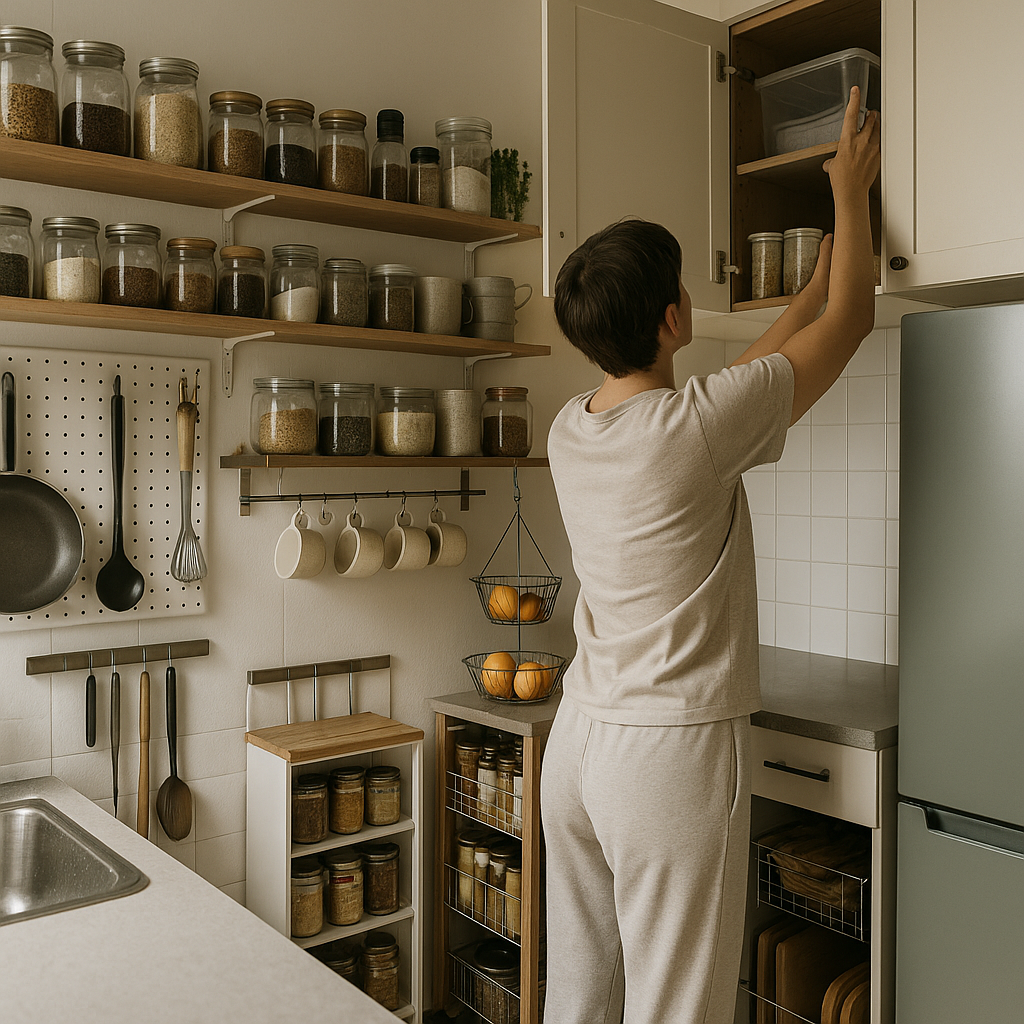
A tiny kitchen forces a kind of honesty most rooms let you avoid. There’s nowhere to hide the bread maker you used twice, no spare drawer for the lids that don’t match any container you own. But here’s the encouraging part: small kitchens almost never have a true space problem. They have a system problem. The square footage is fixed, yet most cramped kitchens are wasting a third of their actual capacity in dead air above shelves, bare walls, and the awkward zone under the sink.
This guide walks through how to genuinely double the usefulness of a small kitchen — not with a renovation, but with smart decisions about what stays, where it lives, and how you use the vertical and hidden space you already own.
Start by Removing, Not Storing
The instinct in a tiny kitchen is to buy organizers immediately. Resist that. Every clever bin you add to hold things you don’t use just locks clutter in place more efficiently. The single highest-impact move is a ruthless edit of what’s in the room.
Professional chefs offer a useful reality check here: the advice from working kitchen pros is to stick with the basics — a few good knives and only the equipment you actually reach for. Most home cooks rotate through a surprisingly small core of tools. Everything else is taking up prime real estate it hasn’t earned.
How to run a fast kitchen edit
- Pull everything out by category — all the mugs, then all the gadgets, then all the food containers. Seeing the full quantity in one place is the moment most people realize they own eight spatulas.
- Apply the “this year” test. If you haven’t used an appliance or tool in the last twelve months, it’s a candidate to donate. Specialty single-use gadgets are usually the first to go.
- Match every lid to a container. Food storage containers are a classic small-kitchen black hole. Recycle the orphans on both sides.
- Be honest about duplicates. You need one good vegetable peeler, not three mediocre ones.
- Donate, don’t relocate. Moving clutter to a closet in another room isn’t decluttering — it’s hiding the problem.
Only once the room holds what you truly use should you start thinking about storage solutions. Now the organizers you buy will serve the things that matter instead of preserving dead weight.
Look Up: The Vertical Space You’re Ignoring
One of the most repeated pieces of advice from professional organizers is almost meditative: lie on the floor and look up. People reflexively think about kitchens in terms of floor area and counter inches, and they completely overlook the tall column of empty space stretching from countertop to ceiling.
That vertical zone is where a small kitchen’s hidden capacity lives. Walls, the sides of cabinets, the backs of doors, and the air above your existing shelves are all storage waiting to be claimed.
Open shelving and wall-mounted storage
Open shelves are a small-kitchen favorite because they turn bare wall into working storage while keeping everyday items visible and within reach. They suit dishes, glassware, frequently used small appliances, and attractive jars of staples. The trick is restraint — open shelving only looks good and stays functional when it isn’t crammed. Store what you reach for daily, and keep the styling minimal so it reads as tidy rather than chaotic.
If you don’t have free wall space for shelves, mount a rail or rack instead. A simple wall-mounted rail with S-hooks can carry utensils, mugs, measuring cups, and pot holders, freeing up a whole drawer in the process. The goal is to hang as many items as you reasonably can, because every item on the wall is an item no longer eating into a cupboard.
Don’t forget cabinet doors and sides
The inside of a cabinet door is one of the most underused surfaces in any kitchen. A slim over-the-door rack or a few adhesive hooks can hold cutting boards, pot lids, foil and wrap boxes, or cleaning supplies under the sink. The exposed end of a cabinet run can take hooks for aprons, towels, or a small spice rack.
Reclaim the Dead Space Inside Cabinets
Open most small-kitchen cupboards and you’ll find one or two fixed shelves with a tall gap of unused air above the plates and below the shelf above. That empty band is exactly where you double your storage — the same principle as adding a second hanging rod in a packed closet.
- Under-shelf baskets slide onto an existing shelf and hang beneath it, instantly creating a second layer for mugs, napkins, or wraps in space that was previously just air.
- Shelf risers or stacking shelves split a tall cabinet into two usable levels, so you can store glasses on top and short jars below without stacking precariously.
- Tension rods are quietly one of the cleverest tools in a tiny kitchen. A simple tension pole fitted across a food cupboard can suspend a roll of paper towels, hold textiles, or — with a few hooks — hang light items so they’re always to hand. Stand one vertically in a cabinet and it becomes a divider for baking sheets and cutting boards.
- Lazy Susans bring the contents of deep, awkward corner cabinets within reach, eliminating the “stuff lost at the back” problem.
- Pull-out bins turn a deep shelf into a drawer you can actually see into — great for spices, snacks, or baking supplies that otherwise disappear.
One renter-friendly trick worth highlighting: a rolling cart or pull-out unit sized to fit a gap can hold an entire category — all your baking gear, or your complete spice collection — in a footprint you didn’t think was usable. Just make sure anything on wheels is secured or weighted at the bottom so it can’t tip, especially in a household with kids.
Make Drawers Work Harder
Some small kitchens have shockingly few drawers — sometimes just three for the entire room. When drawer space is that scarce, every inch has to be deliberate. A working parent packing school lunches five days a week genuinely needs a full drawer of food storage containers; someone who eats out most nights does not. Let your real routine decide what earns drawer space.
Practical drawer fixes
- Use adjustable drawer dividers to give utensils, tools, and gadgets defined homes so they stop sliding into a tangled pile.
- Store containers and lids together but separated — nest the containers and file the lids upright in a divider so they don’t avalanche.
- File items vertically where you can. Standing food packets, dish towels, or even spice jars on their edge lets you see everything at a glance and fit far more in.
- Reserve your best drawer — the one nearest where you cook — for the tools you touch every single day, not the ones you use once a month.
Aim for functionality over a magazine-perfect result. A drawer doesn’t need to look styled; it needs to let you find what you want in two seconds.
Borrow Counter Space You Didn’t Know You Had
Counter space is the rarest commodity in a tiny kitchen, and the frustrating thing is that two of your largest flat surfaces are usually off-limits during cooking. Your stovetop sits idle while you chop, and your sink is dead space the moment you’re not washing up.
You can borrow both temporarily:
- Lay a large cutting board across the sink to create an instant prep surface, then lift it away when you need the basin again. Boards designed to span a sink make this a clean, stable setup.
- Cover unused burners with a board or stove cover during prep to turn the cooktop into extra counter — just never with the burners on or hot.
These tricks don’t add permanent storage, but they relieve the counter congestion that makes a small kitchen feel impossible to work in, which is often the real day-to-day pain point.
Add Flexible Storage With a Pegboard
If you have a stretch of bare wall, a pegboard is one of the most adaptable solutions for a small kitchen. Made famous by chefs who hang their entire batterie de cuisine on the wall, it lets you arrange hooks, shelves, and holders exactly where you need them — and rearrange them as your needs change. Hang pots, pans, utensils, and even small baskets for odds and ends. Because the layout is fully customizable, a pegboard adapts to an awkward wall far better than fixed cabinetry ever could, and it keeps your most-used tools visible and grabbable.
The Bottom Line
A tiny kitchen rewards a clear order of operations. First, declutter so you’re only storing what you genuinely use — this alone often solves half the problem. Then go vertical, claiming walls, cabinet doors, and the empty air above your shelves with hooks, rails, under-shelf baskets, and tension rods. Finally, refine with drawer dividers, sink-and-stove prep tricks, and a pegboard for the tools you reach for constantly.
Start with the single cabinet or drawer that frustrates you most. Empty it, edit it, and add one well-chosen organizer to capture its wasted vertical space. That one visible win will show you how much capacity your kitchen had all along — and give you the momentum to do the rest.