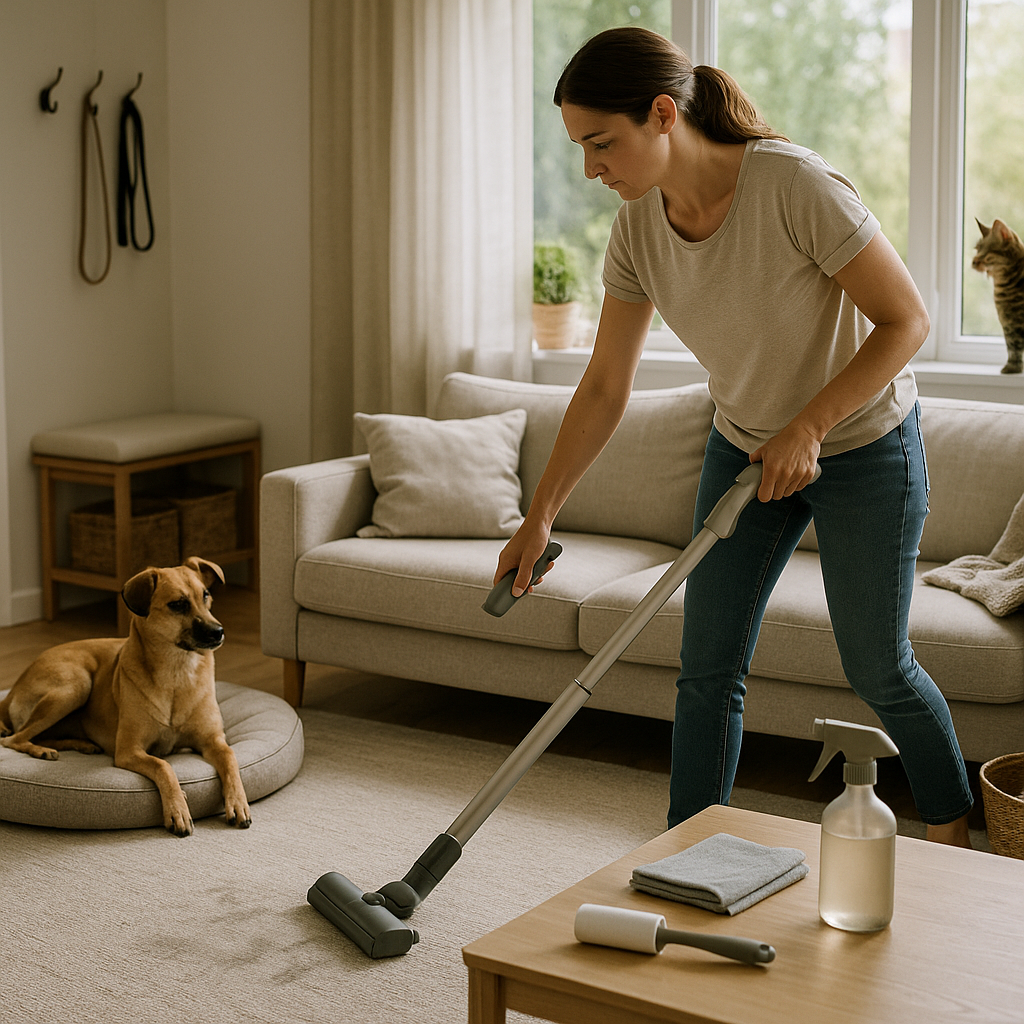
Anyone who shares their home with a dog, cat, or other furry companion knows the trade-off: unconditional love in exchange for a never-ending battle with fur, dander, muddy paw prints, and the occasional mystery puddle. Pets don’t have to mean a permanently grubby house, but they do change the math of cleaning. The strategies that work in a pet-free home simply aren’t enough when there’s a shedding Labrador or a counter-cruising cat in the picture.
The good news is that keeping a clean home with pets is less about cleaning harder and more about cleaning smarter. With the right tools, a few well-placed systems, and a routine that intercepts mess before it sets in, you can have both a tidy home and a happy animal. Here’s how to do it without losing your weekends to a vacuum cleaner.
Build a Pet-Smart Cleaning Toolkit
Before you tackle a single pet mess, set yourself up with the right gear. The single most important investment is a vacuum with a HEPA filter. Pet hair is only half the problem—the dander and microscopic allergens that come with it are what linger in the air and settle into soft surfaces. A HEPA filter actually captures those fine particles instead of recirculating them, which makes a noticeable difference in air quality, especially if anyone in the household has allergies.
Beyond the vacuum, the most valuable item in your arsenal is an enzyme-based cleaner. Unlike standard all-purpose sprays, enzyme cleaners break down the proteins in urine, vomit, and other organic messes, which is what eliminates odor rather than just masking it. This matters enormously with pets, because a smell you can’t detect is often still very obvious to your animal—and a spot that still smells like a bathroom invites repeat accidents.
A few other items worth keeping on hand:
- Foam shaving cream (the plain foam type, not gel) is a surprisingly effective treatment for set-in stains like vomit or pet urine on rugs. Spray it on, let it foam for a minute or so, then wipe away with warm water.
- White vinegar and baking soda—a pet-safe, budget-friendly duo for general cleaning and deodorizing. Baking soda sprinkled on carpet before vacuuming helps neutralize lingering odors.
- Cleansing wipes or paper towels with a spray solution for quick surface wipe-downs.
- A rubber squeegee or damp rubber glove, which drags embedded hair out of upholstery and carpet far better than a vacuum alone.
- Baby wipes for cleaning hard-to-reach nooks, baseboards, and the grimy corners where fur collects.
Win the War on Pet Hair and Dander
Fur is the most relentless part of living with pets, and the only real answer is frequency. Vacuuming once a week is a recipe for tumbleweeds of hair under the furniture. Aim to vacuum high-traffic and high-shed areas several times a week, focusing on the spots where your pet sleeps, lounges, and enters the home.
Get hair off soft surfaces
Vacuums struggle with hair woven into upholstery and bedding. This is where a rubber squeegee or a damp rubber glove earns its keep—run it across the couch cushions and you’ll be amazed at how much fur balls up and lifts away. For washable items, toss pet beds, blankets, and slipcovers in the laundry regularly using a pet-safe detergent, and run a quick vacuum or lint roll over them between washes.
Manage dander in the air
Dander is lighter than hair and floats, settling on surfaces you might not think to clean. Wiping down baseboards, shelves, and the tops of door frames with a slightly damp cloth catches dander before it recirculates. Changing your HVAC filter more often than you would in a pet-free home also helps keep airborne allergens down.
Tackle Accidents and Stains the Right Way
When a pet has an accident, speed is everything. The longer a mess sits, the deeper it penetrates into carpet padding, grout, or upholstery fibers, and the harder it becomes to fully remove both the stain and the odor.
Here’s a reliable sequence for fresh messes:
- Blot, don’t rub. Press a clean cloth or paper towel into the spot to absorb as much liquid as possible. Rubbing only spreads the mess and pushes it deeper.
- Apply an enzyme cleaner generously. Saturate the area—not just the visible stain, but slightly beyond it—and let it sit for the time recommended on the label so the enzymes can break down the organic material.
- Blot again and let it dry. Avoid the temptation to scrub. For tougher set-in stains, foam shaving cream can be a powerful backup before or after the enzyme treatment.
- Confirm the odor is gone. If you can still smell anything once it dries, repeat the process. A lingering scent is an open invitation for your pet to return to the same spot.
A word of caution: avoid ammonia-based cleaners on pet urine. Urine contains ammonia, so cleaning with it can actually signal to your pet that the spot is an acceptable place to go again.
Keep Kitchens and Counters Genuinely Clean
This section is especially important for cat owners. Cats are notorious counter-walkers, and the same paws that step in a litter box can end up on the surfaces where you prepare and eat food. Even if you’ve trained your cat to stay off—or you simply allow it—it’s worth assuming that food-prep surfaces have been visited and treating them accordingly.
The simple habit that solves this: wipe counters before and after you put food on them. A cleansing wipe or a paper towel with cleaning solution takes seconds and removes invisible tracks of litter sand and bacteria. A few more kitchen practices that pay off:
- Store cutting boards, knives, and other prep tools inside closed cupboards and drawers rather than leaving them out on the counter where paws can reach.
- Wash food and water bowls daily, just as you’d wash your own dishes—bowls develop a slimy bacterial film faster than most people expect.
- Keep pet food in sealed containers to avoid attracting pests and to contain the crumbs and dust that come with kibble.
Set Up Systems That Prevent Mess Before It Starts
The most effective pet cleaning happens before any cleaning is needed at all. Smart organization and a few strategic barriers dramatically cut down on how much mess actually reaches your floors and furniture.
Create a dedicated pet station
Designate a single cabinet, drawer, or bin for everything pet-related: food, treats, brushes, leashes, towels, and cleaning supplies for accidents. Containing it all in one place means you’re not chasing supplies around the house, and it keeps the visual clutter of pet gear from spreading. A pet station near your pet’s main living area makes daily maintenance frictionless—when the cleanup tools are right there, you actually use them.
Intercept dirt at the door
Most of the mud and outdoor debris in your home arrives on paws. A sturdy mat at every entrance, paired with a towel kept by the door for wiping paws after walks, stops a remarkable amount of grime from ever reaching your living room. For heavy shedders, brushing your pet outside or near the door—rather than in the middle of the living room—keeps loose fur from drifting through the house.
Keep Your Home Cleaning Pet-Safe
A clean home shouldn’t come at the cost of your pet’s health. Many common household cleaners contain chemicals that are harmful if a curious animal licks a freshly mopped floor or chews a wipe. Building pet safety into your routine is non-negotiable.
- Store all cleaning products well out of reach—in a high cabinet or behind a childproof latch. This includes the enzyme cleaners and stain treatments you’ll be using regularly.
- Lean on gentler options like vinegar and baking soda for everyday cleaning where you can. They’re effective deodorizers and far less worrying around animals.
- Let treated surfaces dry fully before letting pets back in. Whether you’re mopping floors or spraying a counter, give the area time to dry so there’s nothing wet for paws or tongues to pick up.
- Consider steam cleaning for deep cleans. Steam sanitizes carpets and upholstery with high heat instead of chemicals, which makes it a great pet-friendly choice for periodic deep cleaning.
If your pet ever ingests a cleaning product or shows signs of illness after exposure, contact your veterinarian or an animal poison control line right away. When choosing new products, it’s always worth a quick check of the label and, if you’re unsure, a conversation with your vet about what’s safe to use around your specific animal.
The Bottom Line
Cleaning a home with pets is a game of consistency, not heroics. The households that stay clean aren’t the ones doing marathon scrub-downs—they’re the ones with a HEPA vacuum running a few times a week, an enzyme cleaner ready for instant accident response, a pet station keeping supplies organized, and a door routine that stops dirt before it spreads. Start with the two highest-impact moves: invest in a proper vacuum and keep an enzyme cleaner within arm’s reach. Build the rest of these habits in gradually, and you’ll find the daily upkeep shrinks until a clean, pet-friendly home feels effortless.